






ACTION ALERT: Our Students Can’t Wait Another Decade
We believe in a future where New Mexico does not rank 50th in education. A future where every student can succeed and our pub...

 Student achievement has been declining across the country since 2013, and the COVID-19 pandemic exacerbated that decline. A new national report, the 2026 Education Scorecard, highlights what is helping some states make progress and what continues to hold students back.
Since the Education Scorecard was first released in 2022, New Mexico has never been included in the analysis due to ongoing data limitations. While this is frustrating, it underscores the importance of strong data systems, consistent assessments, and sound accountability measures that help families, educators, and policymakers understand how students are doing.
Even without New Mexico-specific results, the report offers valuable insights into student achievement and recovery. Here’s what you need to know:
One of the report’s most important findings is that the nation is experiencing a learning recession—a long-term decline in student achievement that began well before COVID-19 and was accelerated by the pandemic.
Researchers found that reading achievement was already declining before COVID-19. In fact, the annual reading losses from 2017 to 2019 were about as large as the losses experienced during the pandemic itself. Nationally, Grade 8 NAEP reading scores are now at their lowest level since 1990, while Grade 4 reading scores have fallen back to pre-2003 levels. The report points to several factors contributing to the learning recession, including chronic absenteeism, increased social media use, and the decline of test-based accountability systems.
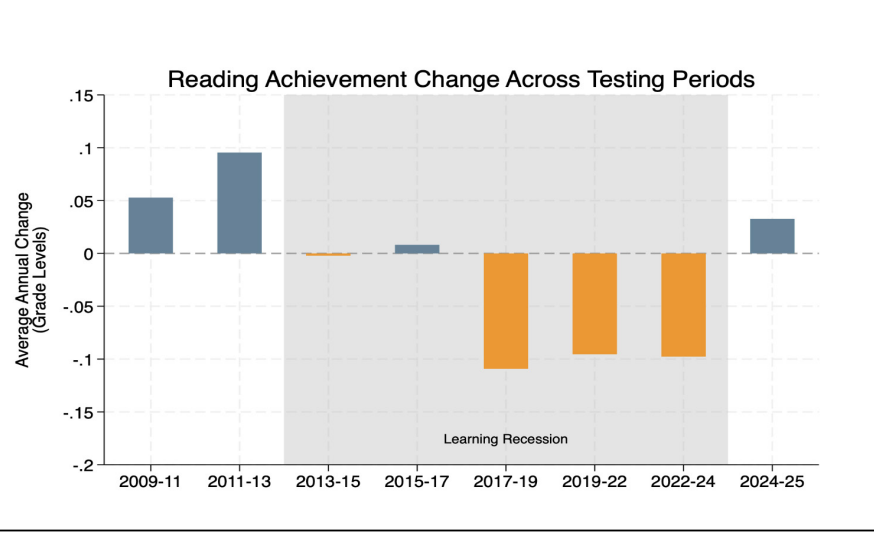
FIGURE 2. ANNUAL RATE OF IMPROVEMENT IN ACHIEVEMENT 2009–2025
Another key finding is that states with the strongest reading gains have invested in comprehensive Science of Reading reforms.
Between 2022 and 2025, seven states and the District of Columbia improved reading achievement: Louisiana, Maryland, Tennessee, Kentucky, Indiana, Mississippi, Minnesota, and Washington, D.C. Notably, every state that saw gains was implementing at least seven of the 18 Science of Reading policy elements used in the report. Researchers found that no state with fewer than seven Science of Reading policy elements in place improved reading outcomes.
Among the strongest-performing states:
New Mexico has made meaningful progress toward implementing the Science of Reading since 2019, but there is still work to do. Of the 18 early literacy principles evaluated in the report, New Mexico has fully implemented four and partially implemented eight, earning a score of 13 out of 18.
Learn more about the principles New Mexico has implemented and compare implementation across states using the link below.
Nationally, nearly one in four students is chronically absent. In New Mexico, that number is higher: one in three students.
The report found that if attendance rates had returned to pre-pandemic levels, academic recovery would have been stronger. For New Mexico, this means addressing chronic absenteeism must remain a priority.
While New Mexico’s ongoing exclusion from the Education Scorecard is disappointing, the national findings point us toward solutions: strengthen accountability, continue advancing Science of Reading reforms, and address chronic absenteeism so more students have the opportunity to succeed.
We encourage you to explore the full report using the button below.