





2025-2026 Student Achievement Results
This morning, the New Mexico Public Education Department released statewide assessment data for the 2025–2026 school year. ...

This morning, the New Mexico Public Education Department released statewide assessment data for the 2025–2026 school year. The results show our state has sustained progress, but the pace of improvement remains too slow.
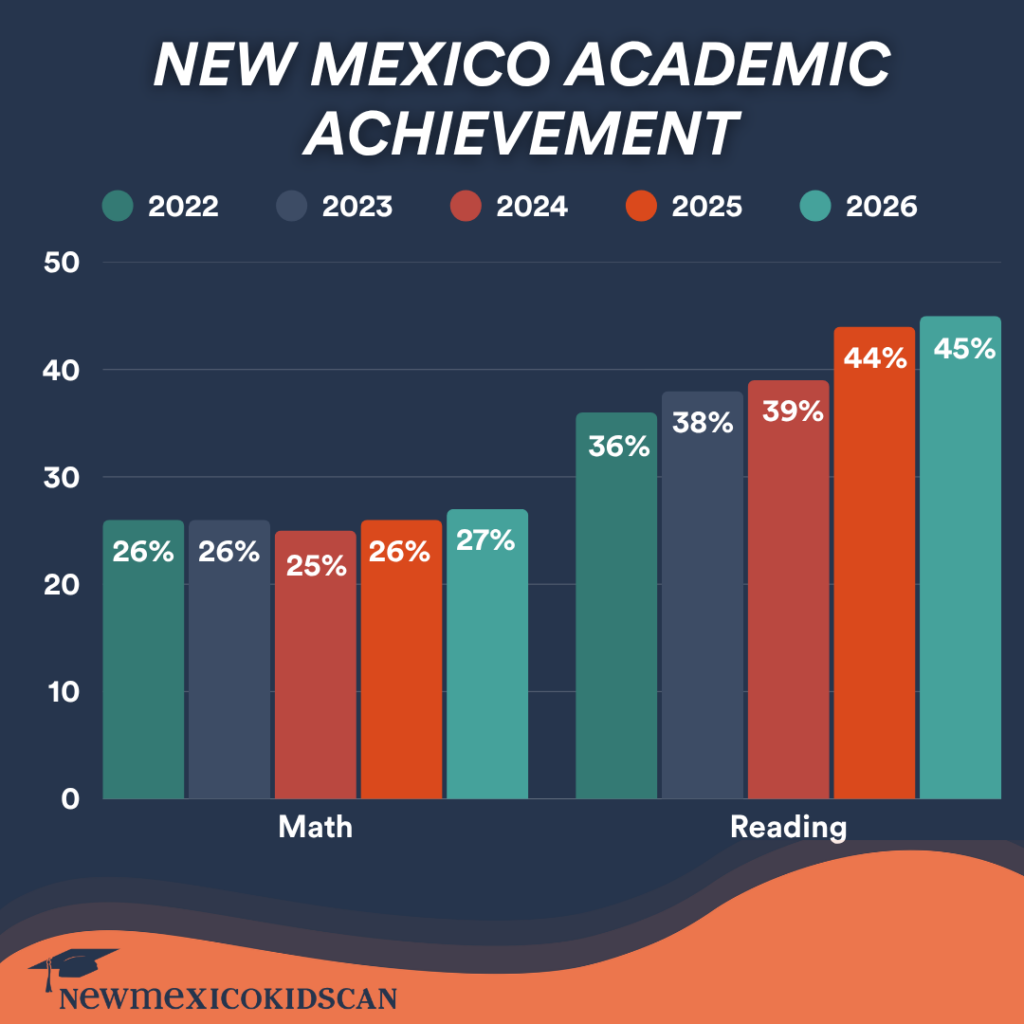
Statewide reading proficiency increased slightly from 44% in 2024–2025 to 45% in 2025–2026, while math proficiency increased from 26% to 27%. High school results reveal that just 12.6% of 11th-grade students are proficient in math, while 37.1% are proficient in reading.
At this pace, we are not improving fast enough to close longstanding achievement gaps and adequately prepare our students. The urgency of accelerating student growth was highlighted earlier this summer, when the Legislative Finance Committee released a report finding that, at current rates of academic growth, it would take the average fourth grader more than nine years to reach proficiency in reading and 22 years to reach proficiency in math.
While statewide proficiency remained largely stable, New Mexico’s third- and fourth-grade students posted significant year-to-year reading gains. Third-grade reading proficiency increased five percentage points, from 40% to 45%, while fourth-grade proficiency increased three points, from 48% to 51%.
We are also seeing important long-term progress among Yazzie-Martinez students. While opportunity gaps remain, every subgroup has made progress in reading since 2022, with Native American and economically disadvantaged students outpacing statewide growth.
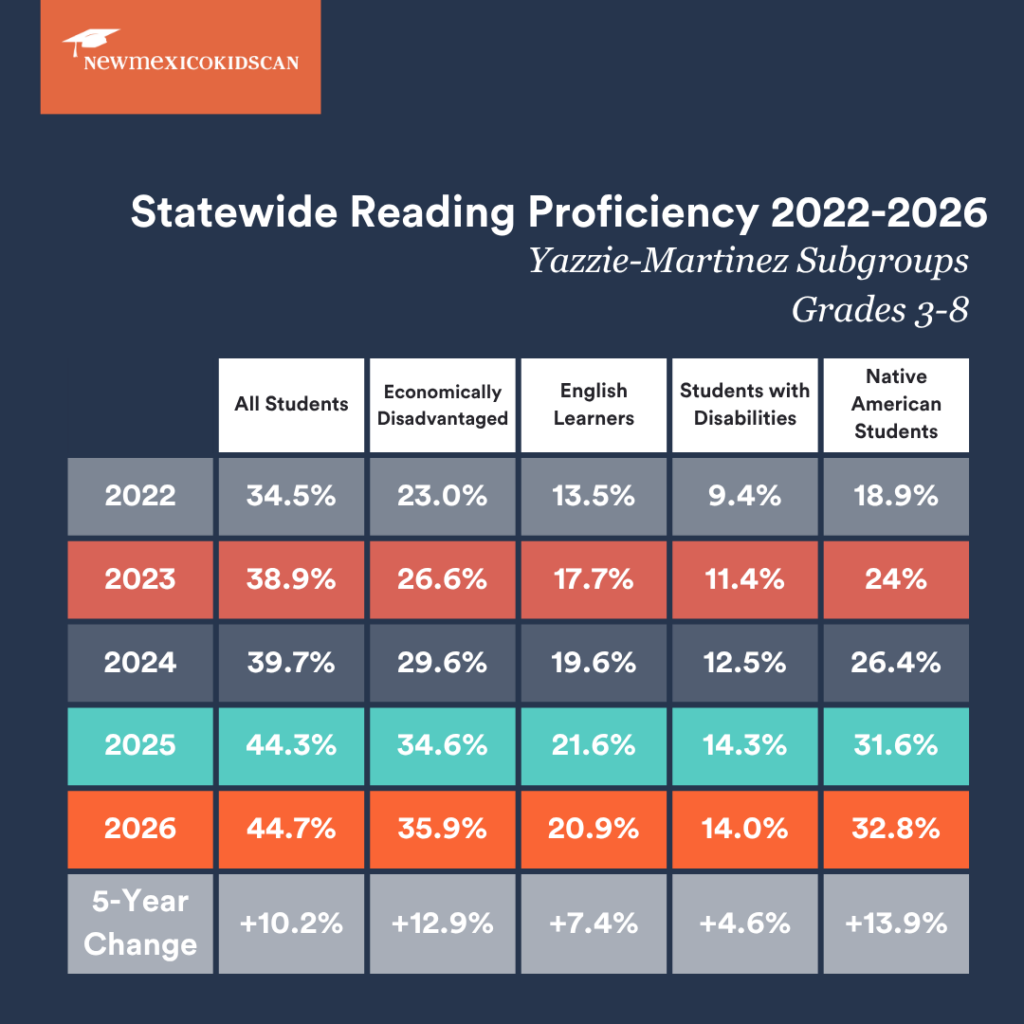
Native American and economically disadvantaged students posted the largest gains. Reading proficiency increased 13.9 percentage points among Native American students and 12.9 points among economically disadvantaged students. English learners gained 7.4 points, while students with disabilities gained 4.6 points.
Today’s data brings mixed feelings. While we celebrate sustained progress and the meaningful growth among third- and fourth-grade students, it is clear we have urgent work to do.
Over the past few years, our state has made significant investments and passed important literacy and math policies, but policy and funding alone will not improve student outcomes without a shared commitment to sound implementation and accountability.
For our education system to make rapid progress, everyone must be moving in the same direction. That means our governor, legislature, 89 school boards, superintendents, and school leaders must be aligned toward what works for students.
Debates over local control, assessments, technology, and politics can distract us from our shared responsibility to deliver better outcomes for New Mexico’s students. To achieve the growth our students need, doing what works cannot be the exception. It must become the expectation across our state.
As our team continues to analyze these results, stay tuned for a more detailed look at student performance across New Mexico’s ten largest school districts, grade-level trends, opportunity gaps, and more.